Blog

My Amazingly Talented Cousin–Check her out!

If you like music (and really, who doesn’t?) you have to check out my beautiful and amazingly, crazingly talented cousin, Natalie Duque.  She’s a singer-songwriter with a soulful voice that stays with you well after the song’s ended. Last year, she released the EP “Show and Tell” and her new EP “Shine Your Light” is now streaming at her website www.natalieduque.com. The new songs will be available in iTunes soon and I can’t wait to purchase them and add them to my project playlist (because, of course I have a playlist of songs that inspire me!!) My favorite in the new EP? I think it’s “So Close,” though the other two, “When I Fall” and “Pieces” are just as awesome!

So check her out. Go to her website, listen to her songs, check out her videos, Like her on FB and follow her on Twitter!

Blog, Writing

Quotes on Writing

I love quotes. I like how we can tie them into what we do, or how they can serve to motivate us. Here are twenty of my favorite quotes on writing:

  1. “You must stay drunk on writing so reality cannot destroy you.”  ~Ray Bradbury
  2. “And by the way, everything in life is writable about if you have the outgoing guts to do it, and the imagination to improvise.  The worst enemy to creativity is self-doubt.”  ~Sylvia Plath
  3. “If there’s a book you really want to read, but it hasn’t been written yet, then you must write it.”  ~Toni Morrison
  4. “Substitute “damn” every time you’re inclined to write “very;” your editor will delete it and the writing will be just as it should be.”  ~Mark Twain
  5. “Don’t tell me the moon is shining; show me the glint of light on broken glass.”  ~Anton Chekhov
  6. “I love writing.  I love the swirl and swing of words as they tangle with human emotions.”  ~James Michener
  7. “Do not put statements in the negative form.
    And don’t start sentences with a conjunction.
    If you reread your work, you will find on rereading that a
    great deal of repetition can be avoided by rereading and editing.
    Never use a long word when a diminutive one will do.
    Unqualified superlatives are the worst of all.
    De-accession euphemisms.
    If any word is improper at the end of a sentence, a linking verb is.
    Avoid trendy locutions that sound flaky.
    Last, but not least, avoid clichés like the plague.”
    ~William Safire, “Great Rules of Writing”
  8. “When something can be read without effort, great effort has gone into its writing.”  ~Enrique Jardiel Poncela
  9. “The best time for planning a book is while you’re doing the dishes.”  ~Agatha Christie
  10. “The road to hell is paved with adverbs.”  ~Stephen King
  11. “As for my next book, I am going to hold myself from writing it till I have it impending in me:  grown heavy in my mind like a ripe pear; pendant, gravid, asking to be cut or it will fall.”  ~Virginia Woolf
  12. “Was it only by dreaming or writing that I could find out what I thought?”  ~Joan Didion
  13. “Every author in some way portrays himself in his works, even if it be against his will.”  ~Goethe
  14. “Don’t try to figure out what other people want to hear from you; figure out what you have to say. It’s the one and only thing you have to offer.” ~ Barbara Kingsolver
  15. “To avoid criticism, do nothing, say nothing, be nothing.” ~ Elbert Hubbard
  16. “We are all apprentices in a craft where no one ever becomes a master.” ~ Ernest Hemingway
  17. “I’m not a very good writer, but I’m an excellent rewriter.” ~ James Michener
  18. “The process of writing has something infinite about it. Even though it is interrupted each night, it is one single notation.” ~ Elias Canetti
  19. “Write your first draft with your heart. Re-write with your head.” ~ From the movie Finding Forrester
  20. “If you don’t have the time to read, you don’t have the time or the tools to write.” ~ Stephen King
Blog, Writing

My Writing Process

If there’s one fact about writing that I make sure to stress to my students, it’s that writing is a process. There’s no way around it, and the sooner they embrace this reality, the easier their time in writing classes will be (and, hopefully, the better their work will be!) This basic tenet of writing holds true in academic and creative writing alike (heck, it holds true in any area of writing!), though for each I approach it slightly different.

But knowing this and putting it into practice are two completely different things.

When I was working on my MA thesis, I had detailed outlines, lots (and lots and lots) of 3×5 index cards, books strewn on my dining room table (where I did most of my writing), notes and scribbles from my notebooks, copies of relevant essays I’d written throughout my graduate career, and my laptop. It was a straightforward research process, but one that involved prewriting, writing and rewriting nonetheless.

Writing this novel, though, has taught me a completely different process. This one is more organic and chaotic; instead of a linear process, it’s one that’s cyclical. I’ll write a few scenes, revise them, rewrite them, organize them, separate them, write a few more scenes. Back and forth, back and forth, until I see the story moving forward. In between, I do research as needed, I write and re-write character sketches, and I look for images for inspiration. I have a writing “playlist” on my computer/phone (consisting mostly of Adele and one or two other songs) and they have come to embody my world, my story. I’ve created a creative space in one of the rooms upstairs. In that small, orange room (the walls are painted orange), I have a dry-erase board and some cork-boards containing lists of plot points, ideas, scribbles of important tidbits of my characters/world, and any other pertinent notes and inspiration. These are all over a small writing desk, which is mostly bare except for my laptop, a couple of books, and more notes. Oh yeah, and my Cricut machine from when I tried scrapbooking and such (still love that stuff, just don’t have time! Writing trumps scrapbooking any day.)

But my process doesn’t end with the written. Every day, on my commute to and from work, in between classes, in the bathroom–in other words, everywhere–I’m thinking of my characters. I’m thinking of the story and where it’s going. I’m thinking of the world I’m developing. I’m asking myself, what if? What if this happens? What if that goes down? And I’m coming up with more ideas. Or, I’ll write down notes in my phone (love that app!) and when I get home, to my writing space, I’ll sketch out those ideas some more.

And then, after I’ve written and rewritten my scenes, I share them. In my UCLA extension classes. With my critique groups. With select friends and family. And I take their suggestions and questions, and I revise some more. I used to hate revision; now, I actually like it. It’s what allows the skeleton to fill out and transform into something beautiful.

It’s a never-ending process. It’s not linear. It’s chaotic. And I wouldn’t have it any other way.

Blog

The Hunger Games in Class

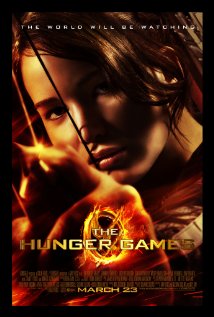
Today marked the start of discussing The Hunger Games in one of my classes. It’s the first time I do so (but certainly not the last!) and I was as excited as most of my students. I think we’ve all been eagerly counting down until we could indulge in (academic) conversations about the book.

I started them off reading Shirley Jackson’s “The Lottery,” which I think is appropriate on many levels for The Hunger Games. If you haven’t read “The Lottery,” you totally should. You can find it here. The mood, the piling into a square, the selection of names (lottery), the gruesome results. There’s even mention of coal mining and it’s a gorgeous day, the day the story takes place. Some of my students had already read it; others were completely surprised by the outcome.

Then we started talking about the first few chapters: the characters, the setting, the plot, and the themes that were starting to unravel. And we saw a couple short interviews with Suzanne Collins.

There’s a great line in chapter three when Gale goes to visit Katniss before she’s taken to the train. He’s giving her tips on how to survive; she’s a great hunter and it should be no different in the arena. Except instead of killing animals, she’ll be killing people, other kids like herself. She says she doesn’t know how to kill people, to which Gale replies, “How different can it be, really?” And then Katniss follows with this:  “The awful thing is that if I can forget they’re people, it will be no different at all.” Bam.

This is what allows all the atrocities in the world to happen. In real life. It’s people forgetting that those they’re hunting or hurting or persecuting are also people. It’s why genocide exists. Why slavery existed. Why all the horrors we learn about in history, many of which are still occurring, existed.

Throughout the term, we’ve used a thematic reader in my class: Remix: Reading + Composing Culture. It’s divided into seven themes: identity, community, competition, romance, entertainment, nature, and technology. In one of the essays for competition, the idea that fraternity hazings and other college tribes/rituals might not be so far off from other aspects like race, creed, religion, etc. They create an us versus them situation. The moment we have an us, and there’s a them, and we can forget that “them” are just as human as we are, then we’re in danger of violating the basic humanity of “them.” The Hunger Games, like the Harry Potter series, really tap into that idea.

I know the last few weeks of the term are going to be a mix of fun and seriousness. I’m excited about the final papers. They’re analyzing the book using one of the seven themes we’ve discussed throughout the term. These are some of the ideas I gave them:

  • How does Katniss’ identity change throughout the book? Is it molded by her experiences or is she born with certain traits that just flourish with the challenges? How do the assumptions we hold of identity play out in the book?
  • What role does community play in The Hunger Games? Does her community have her best interest in mind? Does it accept her just as she is, or does she have to change to fit in? How are the assumptions upheld or challenged? Is it any different from any current world-wide communities?
  • Are the Games reflective of our natural urge to compete? Is competition linked to a deep-rooted need to survive? Will the same be true for games that are not life-or-death?
  • How is Katniss and Peeta’s staged romance any different than real-world high-profile romances? Does their romance challenge or uphold any of the assumptions? Does love conquer all? Are they soul mates?
  • Think about the way the Games are televised. What role does entertainment play in The Hunger Games? How is such a cruel and vicious “game” used for the gratification of the select, privileged few? What, if any, criticism do you think Suzanne Collins is making of our current obsession with reality TV?
  • Nature in the Games is both beautiful and lethal. It’s also manipulated by the game-makers to ensure someone dies. What assumptions of nature are at play here? Are they challenged or upheld? Does Katniss’ understanding of the natural world aid her in surviving? How have those in power manipulated nature to create alternative, more destructive versions of animals (mutants) and how is that any different to the way we are fixated in fixing or altering what occurs naturally?
  • The world of Panem is limited in some technologies, but it is advanced in others. What role does technology play in helping the characters survive? What tools (think weapons) are used for this purpose?

Yep. I am definitely excited to see how the next couple weeks play out. I am looking forward to talking about the book and I’m enjoying seeing them get excited. I will also be looking forward to these essays. If I have to grade essays, I might as well make them interesting!

Blog, Ramblings, Writing

Five Random Thoughts…Because I’m feeling random today

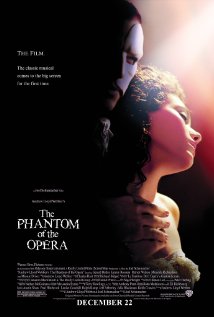
1. I absolutely, positively, no questions asked love the 2004 film The Phantom of the Opera. It is one of the most beautiful adaptations with exquisite detail to set and costume. And of course, there’s the music: it’s hauntingly beautiful. It’s the kind of music that reaches deep into your core and moves you. Andrew Lloyd Weber is a genius. I have to admit that I saw the movie before I ever saw the Broadway production, and that the production I saw was a traveling one, when they came many years ago to South Florida. Though I liked that version, it simply didn’t live up to the art that was the movie (and I love live theater!)

It had been a couple of years since I’d last seen it, and a few weekends ago, my husband and I had a date night in. We pulled out the movie and watched it, marveling again at each part, each song. And I keep replaying the songs –I can’t get enough of them.

2. I am definitely an English teacher and my son is definitely an English teacher’s son. Today, as we were getting ready for bed and I was reading him some bible stories, I went into a short lesson on what a metaphor was. And he listened to everything I had to say, repeating the word back to me and trying out an example with it. He’s four. Yep. Definitely an English teacher’s kid.

3. I want to see The Hunger Games so badly. Like, really, really, really badly. It’s like when Harry Potter came out and every inch of me itched to go see it. That’s me now. Waiting. (Im)patiently. Tapping my toes, strumming my fingers, flipping through the pages, again. Just waiting. I don’t know when I’ll be able to go, which makes the waiting that much more unbearable.

4. I’m eagerly awaiting Veronica Roth’s book Insurgent to come out. I think it’s May; I pre-ordered it on my phone. Sometime before it comes out, I’ll have to re-read Divergent so that it’s fresh in my mind. It’s one of several books that I want to read this summer.

5. I want summer to get here. Now. I’m not a very patient person (though I can be). Four more weeks until this term is over and grades are due. After that, though I’m teaching online courses in the summer, the hours during the day are mine for a glorious month while my son is in school. That means I will have four days, for five weeks, to just write. Of course, I have to factor in some gym time, my gallbladder surgery, and some grading, but I will have more uninterrupted writing time than I do during the regular terms. And I just can’t wait! My goal of finishing the first draft by the end of summer is very much within my grasp…I can almost feel it. And I’m anxious to finish it now. So I can begin really revising it and whipping it into shape; though I tend to write and revise as I go along (I can’t just write from start to finish–I do a lot of back and forth), I won’t feel as if I’m truly revising until the whole damn thing is done. I already have agents I want to query and other stories floating up there in my mind, so I just need to finish writing this thing. Now. 😉