Blog, Writing

Quotes on Writing

I love quotes. I like how we can tie them into what we do, or how they can serve to motivate us. Here are twenty of my favorite quotes on writing:

  1. “You must stay drunk on writing so reality cannot destroy you.”  ~Ray Bradbury
  2. “And by the way, everything in life is writable about if you have the outgoing guts to do it, and the imagination to improvise.  The worst enemy to creativity is self-doubt.”  ~Sylvia Plath
  3. “If there’s a book you really want to read, but it hasn’t been written yet, then you must write it.”  ~Toni Morrison
  4. “Substitute “damn” every time you’re inclined to write “very;” your editor will delete it and the writing will be just as it should be.”  ~Mark Twain
  5. “Don’t tell me the moon is shining; show me the glint of light on broken glass.”  ~Anton Chekhov
  6. “I love writing.  I love the swirl and swing of words as they tangle with human emotions.”  ~James Michener
  7. “Do not put statements in the negative form.
    And don’t start sentences with a conjunction.
    If you reread your work, you will find on rereading that a
    great deal of repetition can be avoided by rereading and editing.
    Never use a long word when a diminutive one will do.
    Unqualified superlatives are the worst of all.
    De-accession euphemisms.
    If any word is improper at the end of a sentence, a linking verb is.
    Avoid trendy locutions that sound flaky.
    Last, but not least, avoid clichés like the plague.”
    ~William Safire, “Great Rules of Writing”
  8. “When something can be read without effort, great effort has gone into its writing.”  ~Enrique Jardiel Poncela
  9. “The best time for planning a book is while you’re doing the dishes.”  ~Agatha Christie
  10. “The road to hell is paved with adverbs.”  ~Stephen King
  11. “As for my next book, I am going to hold myself from writing it till I have it impending in me:  grown heavy in my mind like a ripe pear; pendant, gravid, asking to be cut or it will fall.”  ~Virginia Woolf
  12. “Was it only by dreaming or writing that I could find out what I thought?”  ~Joan Didion
  13. “Every author in some way portrays himself in his works, even if it be against his will.”  ~Goethe
  14. “Don’t try to figure out what other people want to hear from you; figure out what you have to say. It’s the one and only thing you have to offer.” ~ Barbara Kingsolver
  15. “To avoid criticism, do nothing, say nothing, be nothing.” ~ Elbert Hubbard
  16. “We are all apprentices in a craft where no one ever becomes a master.” ~ Ernest Hemingway
  17. “I’m not a very good writer, but I’m an excellent rewriter.” ~ James Michener
  18. “The process of writing has something infinite about it. Even though it is interrupted each night, it is one single notation.” ~ Elias Canetti
  19. “Write your first draft with your heart. Re-write with your head.” ~ From the movie Finding Forrester
  20. “If you don’t have the time to read, you don’t have the time or the tools to write.” ~ Stephen King
Blog, Writing

My Writing Process

If there’s one fact about writing that I make sure to stress to my students, it’s that writing is a process. There’s no way around it, and the sooner they embrace this reality, the easier their time in writing classes will be (and, hopefully, the better their work will be!) This basic tenet of writing holds true in academic and creative writing alike (heck, it holds true in any area of writing!), though for each I approach it slightly different.

But knowing this and putting it into practice are two completely different things.

When I was working on my MA thesis, I had detailed outlines, lots (and lots and lots) of 3×5 index cards, books strewn on my dining room table (where I did most of my writing), notes and scribbles from my notebooks, copies of relevant essays I’d written throughout my graduate career, and my laptop. It was a straightforward research process, but one that involved prewriting, writing and rewriting nonetheless.

Writing this novel, though, has taught me a completely different process. This one is more organic and chaotic; instead of a linear process, it’s one that’s cyclical. I’ll write a few scenes, revise them, rewrite them, organize them, separate them, write a few more scenes. Back and forth, back and forth, until I see the story moving forward. In between, I do research as needed, I write and re-write character sketches, and I look for images for inspiration. I have a writing “playlist” on my computer/phone (consisting mostly of Adele and one or two other songs) and they have come to embody my world, my story. I’ve created a creative space in one of the rooms upstairs. In that small, orange room (the walls are painted orange), I have a dry-erase board and some cork-boards containing lists of plot points, ideas, scribbles of important tidbits of my characters/world, and any other pertinent notes and inspiration. These are all over a small writing desk, which is mostly bare except for my laptop, a couple of books, and more notes. Oh yeah, and my Cricut machine from when I tried scrapbooking and such (still love that stuff, just don’t have time! Writing trumps scrapbooking any day.)

But my process doesn’t end with the written. Every day, on my commute to and from work, in between classes, in the bathroom–in other words, everywhere–I’m thinking of my characters. I’m thinking of the story and where it’s going. I’m thinking of the world I’m developing. I’m asking myself, what if? What if this happens? What if that goes down? And I’m coming up with more ideas. Or, I’ll write down notes in my phone (love that app!) and when I get home, to my writing space, I’ll sketch out those ideas some more.

And then, after I’ve written and rewritten my scenes, I share them. In my UCLA extension classes. With my critique groups. With select friends and family. And I take their suggestions and questions, and I revise some more. I used to hate revision; now, I actually like it. It’s what allows the skeleton to fill out and transform into something beautiful.

It’s a never-ending process. It’s not linear. It’s chaotic. And I wouldn’t have it any other way.

Blog, Ramblings, Writing

Five Random Thoughts…Because I’m feeling random today

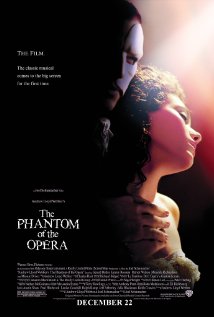
1. I absolutely, positively, no questions asked love the 2004 film The Phantom of the Opera. It is one of the most beautiful adaptations with exquisite detail to set and costume. And of course, there’s the music: it’s hauntingly beautiful. It’s the kind of music that reaches deep into your core and moves you. Andrew Lloyd Weber is a genius. I have to admit that I saw the movie before I ever saw the Broadway production, and that the production I saw was a traveling one, when they came many years ago to South Florida. Though I liked that version, it simply didn’t live up to the art that was the movie (and I love live theater!)

It had been a couple of years since I’d last seen it, and a few weekends ago, my husband and I had a date night in. We pulled out the movie and watched it, marveling again at each part, each song. And I keep replaying the songs –I can’t get enough of them.

2. I am definitely an English teacher and my son is definitely an English teacher’s son. Today, as we were getting ready for bed and I was reading him some bible stories, I went into a short lesson on what a metaphor was. And he listened to everything I had to say, repeating the word back to me and trying out an example with it. He’s four. Yep. Definitely an English teacher’s kid.

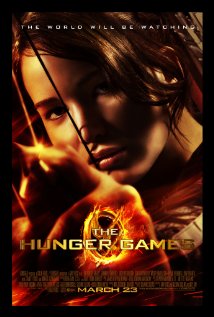
3. I want to see The Hunger Games so badly. Like, really, really, really badly. It’s like when Harry Potter came out and every inch of me itched to go see it. That’s me now. Waiting. (Im)patiently. Tapping my toes, strumming my fingers, flipping through the pages, again. Just waiting. I don’t know when I’ll be able to go, which makes the waiting that much more unbearable.

4. I’m eagerly awaiting Veronica Roth’s book Insurgent to come out. I think it’s May; I pre-ordered it on my phone. Sometime before it comes out, I’ll have to re-read Divergent so that it’s fresh in my mind. It’s one of several books that I want to read this summer.

5. I want summer to get here. Now. I’m not a very patient person (though I can be). Four more weeks until this term is over and grades are due. After that, though I’m teaching online courses in the summer, the hours during the day are mine for a glorious month while my son is in school. That means I will have four days, for five weeks, to just write. Of course, I have to factor in some gym time, my gallbladder surgery, and some grading, but I will have more uninterrupted writing time than I do during the regular terms. And I just can’t wait! My goal of finishing the first draft by the end of summer is very much within my grasp…I can almost feel it. And I’m anxious to finish it now. So I can begin really revising it and whipping it into shape; though I tend to write and revise as I go along (I can’t just write from start to finish–I do a lot of back and forth), I won’t feel as if I’m truly revising until the whole damn thing is done. I already have agents I want to query and other stories floating up there in my mind, so I just need to finish writing this thing. Now. 😉

Blog, Writing

Progress

The winter quarter is coming to an end at UCLA Writer’s Extension, and, in a last assignment, we posted our “final chunk” of material we’d written throughout the course. I was again pleased and surprised at how much I’d gotten done; in the week-to-week writing, I don’t see the end result. It’s just another scene here and there, another exploration of character and motive, another development of the plot and world. But in this “final chunk” I’m able to see a tangible result of my hard work.

I took it a step further, just for my benefit, and I put together work from the last two classes, all on my novel, and I was happy: 24,297 words in 83 pages. Wow! This past summer, I still had only had a rough idea of where I thought I was going and two main characters. Now, I have a story! I have scenes. I know where the story is going and, for the most part, how it’s going to end, though I know at any moment, my characters can throw me a curveball. I have not only started, but I’m making PROGRESS. That’s one cool bean! It keeps me motivated seeing the end to the first draft.

Next week (I think) I might start reading it at my critique group.

On another, writing related note, I submitted two leveled reader manuscripts to an editor (crossing fingers and toes!) and read another one I finished at my critique group tonight. Making some progress there, too.

I am hoping the next month goes by quickly so I can get to May, when I’m only teaching online and when my son’s still in school so I can spend my days writing. Instead of one full day of writing a week, I can get at least four; oh sweet promise!

Blog, Writing

“Dual [writing] Citizenship” and other news

I’m in Chicago this week at the AWP 2012 Conference, and I have to say, I’m loving it (granted, it’s only my first day).

This is the first time I attend  such a conference (most of my conference experiences deal strictly with fiction, nonfiction, poetry, or children’s writing, in mostly workshop form. This, however, is a different experience. For starters, it’s no small event. There are over 10,000 (if I misremember the number, please excuse me) attendees, dozens of lectures/panels happening simultaneously across two hotels, and an impressive celebrity author lineup.

Additionally, though, this conference is great because it encompasses two of my loves: writing and teaching. The lectures/panels that are available broach a wide variety of subjects that pertain to writing and writing programs. The beauty of this combination is that, in one place, I can get tools or listen to conversations about the kids of writing that I do and the classes that I teach. It’s awesome.

The title of this post is in reference to one of the panels I attended today that was titled: “Dual Citizenship: Writing for Both Children and Adults.” It was fabulous and I think it really nailed a problem I’ve been encountering, a sort of snobbery if you will. We’ve been so conditioned to accept a reality of labels that we constantly feel the need to fit into one of those labels, as if writing could be contained in such a way. We don’t have to have just one writing identity (the poet, the fiction writer, the memoirist, the kid lit writer); it’s perfectly okay in embracing this multiple personality effect!

I know that when I get asked the pivotal question,”What do you write?” I stumble sometimes because, well, I like writing it all (though not necessarily all with the same strength)! I don’t want to be known just as a fiction writer or a memoirist or a YA or PB author. I want to write it all. I want to strive to be, like one of the panelists said, Julia Alvarez. Why settle for just one writing identity when you can have several (and be good at several)? It makes perfect sense. Still, whenever I do say I write more than one genre or for more than one age group, I tend to get an “Oh” with a glazed look, as if saying I just haven’t made up my mind what I want to write, that I have to find one niche and stay there.

Well, I refuse.

I enjoy writing. Period. So I will write whatever it is that turns me upside down, inside out. Whatever fills me with excitement. Whatever decides to be what I must write right now. Then, when I’m done with that, I’ll move onto the next project that again commands my attention. Because I think that’s what writers should do. Write what they just absolutely have to write and not what they think they should write. That, I think, should be one of the main writing commandments.

Blog, Ramblings, Writing

Productive Day

It’s late and I’m exhausted, but it’s been quite a productive day for writing! Days like this make me happy.

I worked on my novel project, which I had slightly neglected over the last three weeks. I mean, I still scribbled notes here and there, but I hadn’t done any serious writing for it. Today I did, in part thanks to the start of the Novel II class I’m taking through UCLA’s Writers’ Extension, and in part thanks to my friend who has recently completed her manuscript for a collection of poems (or a novel-in-verse). I am feeling a little better, and writing + incense + Adele = a very happy and relaxed me. It’s just the way it is.

I also revised one of the leveled readers I was working on (seems like forever!) using the guidelines I got from the Leveled Reader Intensive at the SCBWI Miami Conference. I have one other leveled reader that is practically finished, and I want to work on a third. I started the cover letter (shudder – I hate those!) so at least I feel like I’m one step closer to sending that out.

Progress!

So now to sleep because I’m falling asleep at the keyboard and have stopped being useful.

Blog, Writing

Eleven Things I’ve Learned about Writing

Throughout the last few years, I’ve been learning a lot. I’ve swallowed up pride, rolled up my sleeves, and immersed myself into the writing world, and after this year’s SCBWI Miami Conference, I thought I’d make a list of these “things” I’ve learned.

1. Write. This is a no brainer, but years ago, I spent so much time dreaming about writing and talking about writing without actually doing the writing. I came up with ideas and concepts and characters, but it all stayed in ideas, concepts and characters. Nothing got done. I wrote about other things, or I wrote in other ways, but I didn’t write my ideas, concepts, and characters into existence. I let them dissipate. Now, I sit my butt down and write. I make time for writing, somehow, someway, because it’s important. The more I write, the better I get.

2. Take a leap of faith. If I hadn’t taken a leap of faith this past summer, when registering for the children’s writing workshop through UCLA, I wouldn’t have been exposed to this amazing world of children’s writing (including YA), and I wouldn’t have realized how much I enjoy writing for this audience.

3. Revise. This should be another no-brainer, but I’ve only recently really learned how to revise. I mean really revise a creative work. The cyclical process of prewriting, writing and rewriting is crucial, indispensable. Like I tell my students, you can’t just sit down and write something and expect it to be great. It doesn’t happen. It can be good, even really good, but for it to be just right, you have to work it and rework it, like a piece of wet clay, until it takes on the desired shape. I’m heeding my own advice.

4. Be ready to work. It takes work, hard work, to write a story. It’s amazing work, yes. I love each “aha!” moment and I feel that giddiness and awe that comes when the characters and their stories fall into place. I love the feeling of realization that comes when a part of the plot or scene comes full circle and I fully understand what the character was trying to tell me. It’s exciting and absolutely rewarding. But it’s also a lot of hard work. For every “aha” moment, there are fifteen frustrating periods where I don’t know what the hell I’m doing or where I’m going with this or why I’m even bothering. (Okay, so I’m giving some arbitrary numbers here, but you get my point. Often, there are more frustrating moments than enlightened ones, but the enlightened ones make it all worth it.)

5. Following #4 above, know that if you want to write great literature, you’re going to have to put in grueling work. E.B.Lewis said something at the conference that resonated with me: we live in a society where we want straight A’s, but only want to do C work. This is true beyond the academic world (where I see it every day with students); this is true in everything we do, including writing. If we want something great, we’re going to have to put in a great amount of work.

6. Don’t give up. Kathryn Stockett, who wrote The Help, received 60 rejections before getting her book published. Jay Asher, who wrote Thirteen Reasons Why, was rejected twelve times and was close to giving up, but he didn’t. You get the idea. Keep at it. Sure, rejections hurt (I should know!), but they help us become better writers. Every time I receive a rejection, I take another look at my MS (or essay or short story or whatever it was that I submitted) and I revise. And I keep going. Eventually, something’s gotta give, right? Right.

7. Share your work. Really. You need other eyes to see your words and other ears to listen to your words. We don’t live in a bubble, so don’t write in one. One of the ways to improve is to share what we’ve written with others. In a class/workshop. In a critique group. To friends who like to read (and who can give good feedback, not just, “oh I like this” or “this sucks”). I did this for the first time (since I was an undergrad) four years ago, when I raised my hand in a memoir writing workshop and read aloud, in a tremulous voice, what I had written. It was like exposing my soul, but it was good. It helped. And now, whenever I can, I share my work. It makes me a better writer.

8. Read your work aloud. Really. Listen to how your words sound. I give my students this advice when writing academic essays, but the same is true for creative writing. When you read aloud, you catch glitches, awkward phrasing, mistakes. It’s a great tool for revising your work. If you can read it to someone (see #7 above), even better. I do this all the time.

9. Learn to take criticism. The biggest problem with new/some writers (and I’ve been here) is that they think their writing’s the best thing since, well, writing. They think they’ve got it right every time and that there’s little room for improvement. So when they go to a conference or  take a class, and they share their work, they get downright angry when someone else tells them their work isn’t that great and, in fact, it kind of sucks (okay, not in so many words). But the reality is that I was this delusional writer. I hated criticism because I just wanted everyone to tell me how great my writing was. That’s no help at all! If I want to get better, I need people to tell me what’s not working so I can improve it. Of course, it’s also useful to know what does work so I can keep doing that, but I’ve definitely learned to take criticism (even brutal criticism).

10. Go to conferences, join organizations, and know the market. If you want to be a published writer, you have to know what’s out there. If funding permits, go to conferences and join organizations. They are direct links to craft and market and networking. And you have to know what’s out there in the genre in which you’re writing. I’ve done all of this, and I keep doing it. I keep attending conferences and I’m joining organizations and critique groups. I’m researching the market. I go online, read blogs by agents and editors in the genre’s I’m writing.

11. Read. This is a no brainer, and it always surprises me when I hear writers say they don’t read. For me, reading and writing have a direct correlation. You have to be an avid reader to be a good writer. Reading exposes you to other voices, techniques, styles, and skills that you might otherwise ignore. And this is especially important if you’re starting out and you’re still trying to figure out your voice and style. I started as a reader, and I will forever be a reader.

Blog, Writing

SCBWI Conference: Love

The thing I love about writing conferences is they provide opportunity–opportunity to improve skills, to network, to meet new people, and to showcase your writing. We’re a group of like-minded individuals, at different points in this writing and publishing game, coming together to talk about the craft and the business.  It’s wonderful! I usually leave these conferences inspired, ready to re-immerse myself into my project at hand.

This has been true in all the writing conferences I’ve attended, but it’s felt even stronger this time at the SCBWI (Society of Children’s Book Writers & Illustrators) Miami 2012 Conference. Perhaps it’s because I have specific projects in mind, projects to which I’m totally and completely devoted and about which I’m totally and completely obsessed. Or maybe it’s because, like a fellow conference-goer said, anyone who’s writing for kids has to have a more nurturing composition. Or maybe it was because of the fabulous and inspiring line up of authors, editors, and agents. But it was fabulous. The intensive for Leveled/Early Readers, led by Bonnie Bader and Natalie Lescroart, was informative and it cemented my resolution in finishing/polishing my leveled reader MS. I also got some ideas for new stories, so I’m eagerly sketching outlines and notes. To all those who think writing early/leveled readers (especially the first level) is easy: it’s not!

I also loved Jill Corcoran. I came to her blog this past summer thanks to Catherine Ipcizade (who, I might add, is fabulous. She’s the reason why I’m now in children’s writing!) during a children’s writing workshop I took through UCLA Extension Writers’ Program (which, I might add, was also fabulous. Another post for another time.) Anyway, back to Jill Corcoran–her workshop was great and it reiterated concepts I’ve heard before while giving me new “food for thought.” It actually helped to take a look at my current beginning (for my YA project) and realize, I’m not beginning in the right place! I wasn’t brave enough to read aloud today (or rather, by the time I worked up the courage, it was too late), but hearing her lecture and comments was enlightening.

We also got inspirational talks from authors, agents and editors, and I made some new contacts and met some charming new people.

I plan on going to as many of these conferences as I can–it was that good.

Blog, Ramblings, Writing

Writing Warm-Up

Here’s the thing about writing: it really is something you need to do every day. Or, if not every day, then regularly and consistently. If you don’t, you begin to rust on the sides, to stiffen, so that when you do sit down and write again, each word comes out painfully slow with a silent umph as your mind adjusts.

At least, that’s how I’m feeling right now, and really, I’ve only had a small hiatus of about two weeks.

When classes ended, I cheered because I was going to finally have some consistent writing time during the week my son was still in school, before we left to Disney, before Christmas came, before the craziness of the holidays consumed me. And even in that craziness, I had been sure, so sure, that I’d get in some writing time. Unfortunately, life happened. My hubby was off and we had Christmas shopping left to do (which I will never again leave to the last minute–please hit me if I do). That week, I only had one day, about four/five hours, for writing, and those hours were spent on revising one leveled reader draft and writing another leveled-reader. I didn’t work on my novel. The following week, when we went to Disney, I didn’t write. I took notes in my notebook about an amazing restaurant we went to for a blog I wanted to write, but that’s about it. I haven’t written said blog. Last week, I had to stay up for a couple of hours and I did finally work on my novel. I reworked some of the scenes into chapters, but then exhaustion got the best of me and I had to put that down. And I haven’t been able to completely shake the exhaustion and cloud that have moved in on me.

So today, I said enough’s enough. I need to write. I’ve come upstairs, closed myself in my writing room, lit some incense, plugged in the ear phones, and poised myself to write. Instead of the words flowing out easily, though, I sat staring at the screen. What the hell do I write? The words didn’t come. I realized my mind is rusty, though I’m not sure if it’s because of the cloud that’s still hanging around or if it’s because of the small lapse in writing over the past couple of weeks. I don’t like it. And I hear the sage advice I’ve received about writing: just keep writing, every day, something.

So here I am, writing something, warming up. Please excuse the sweat marks as I get myself back in gear.

Blog, Ramblings, Writing

Christmas Eve Thoughts

There’s nothing better than spending Christmas Eve with family, except maybe spending it with family you don’t see often, along with those you see every day, in a manner that reminds you of your childhood.

I was blessed to have that kind of Christmas Eve.

We drove the almost-two-hour trek to my cousin’s house where this year’s celebration was being held. Making this Christmas that more special was the fact that family from Colombia and Germany were joining us. Though we were missing some family, this was the largest gathering we’d had in a while! I sat with my cousins, and we started with the “Remember when?” We giggled and laughed, and I swear time shifted and we were teenagers again, at my aunt’s townhouse, when she lived in Miami, sitting in the front steps and talking about boys.

Once everyone was there, we started novena. Colombians partake in novenas, where, for the nine days leading up to the birth of El Nino Dios on Christmas Day, we gather with family, sing villancicos (Christmas songs), and recall the story of the birth of Christ. The last of the novenas is read on Christmas Eve. Our family is no exception, and though I might not hold onto that tradition every day, I do try to make at least a few novenas, especially if there will be a large group. They’re one of my favorite traditions. This year’s Christmas Eve novena, though, was even more special. My uncles took out their guitars, my aunt passed out the maracas, panderetas, and other noise makers, and the signing commenced. We sand Tutaina, Los Peces en el Rio, Antontiruliroliro, A la Nanita Nana. We ate bunuelos, natilla, empanadas and arroz con leche. Then we passed around the book with the novena readings and those of us brave enough to trying out our rusty Spanish read our part. When it all ended, my aunt read some thoughts she’d penned earlier that day, about love, and family, and their mother (my grandmother) celebrating with us in spirit, and about never forgetting the love that was promised with the birth of El Nino Dios. It was beautiful, and most of us cried. Good crying. We were happy and blessed because we were together.

Isn’t that what Christmas is about? About the love that began because God sent his only Son to Earth because he LOVED us?

And so what if Christmas really didn’t happen on December 25. So what if the celebrating straddles the solemn and the festive. It’s a time to rejoice and love!

Yesterday, I was blessed because it was a day spent with family, first my husband’s, then my own. In each of these homes, the promise of family and love was present, and we enjoyed something more precious than any tangible gift can provide: we enjoyed each other and the gift of family, and love.

It’s days (and nights) like yesterday, when family comes together, that I’m reminded family is the thread that holds our past, our present, and our future together. I am grateful and blessed to have such an amazing family, immediate and extended.

Merry Christmas to all, and to all a good night!